THE LABEL
Read the red diamonds
GB CLP hazard pictograms are diamonds with a red border on a white background. One product can carry several, plus the word Danger or Warning.
Check a mix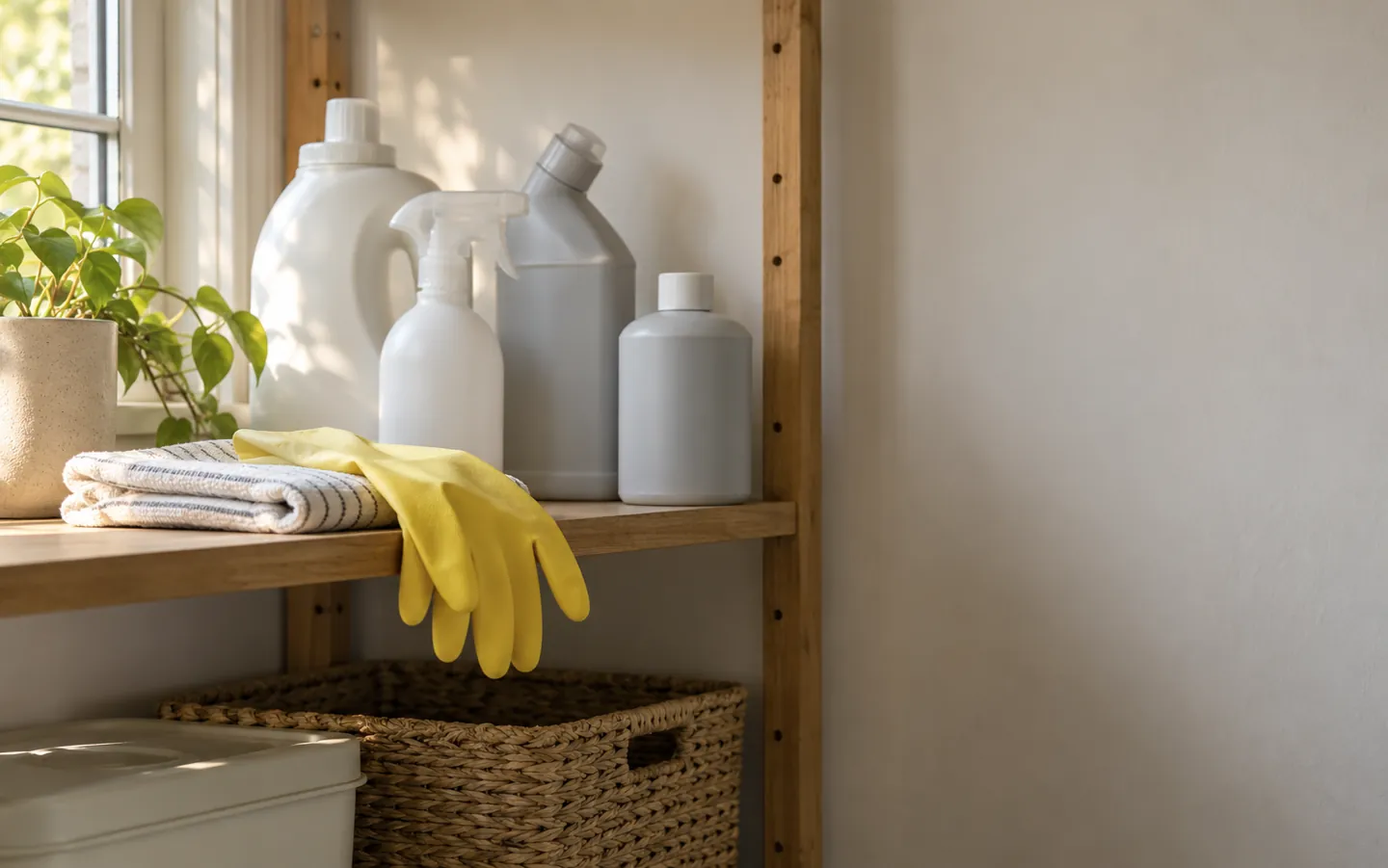
CLEANING AGENTS, EXPLAINED
ONE AT A TIME never in the same bucket
AI-generated image, not a photograph of a real person or place.
The cupboard under the sink is a chemistry set.
Bleach, limescale removers, oven cleaners and washing pods all do their job with strong active agents. The label tells you how strong, and some pairs should never meet in the same bucket.
THE SHORT ANSWER
Three habits cover most of the risk.
None of them needs special kit.
THE LABEL
GB CLP hazard pictograms are diamonds with a red border on a white background. One product can carry several, plus the word Danger or Warning.
Check a mixMIXING
Bleach with ammonia makes chloramine gases; bleach with an acid gives off chlorine gas. Use one product, rinse, then the next.
See the numbersSTORAGE
Child safety charity CAPT says to move cleaners and washing pods to a high or lockable cupboard and never decant them into drinks bottles.
How to store them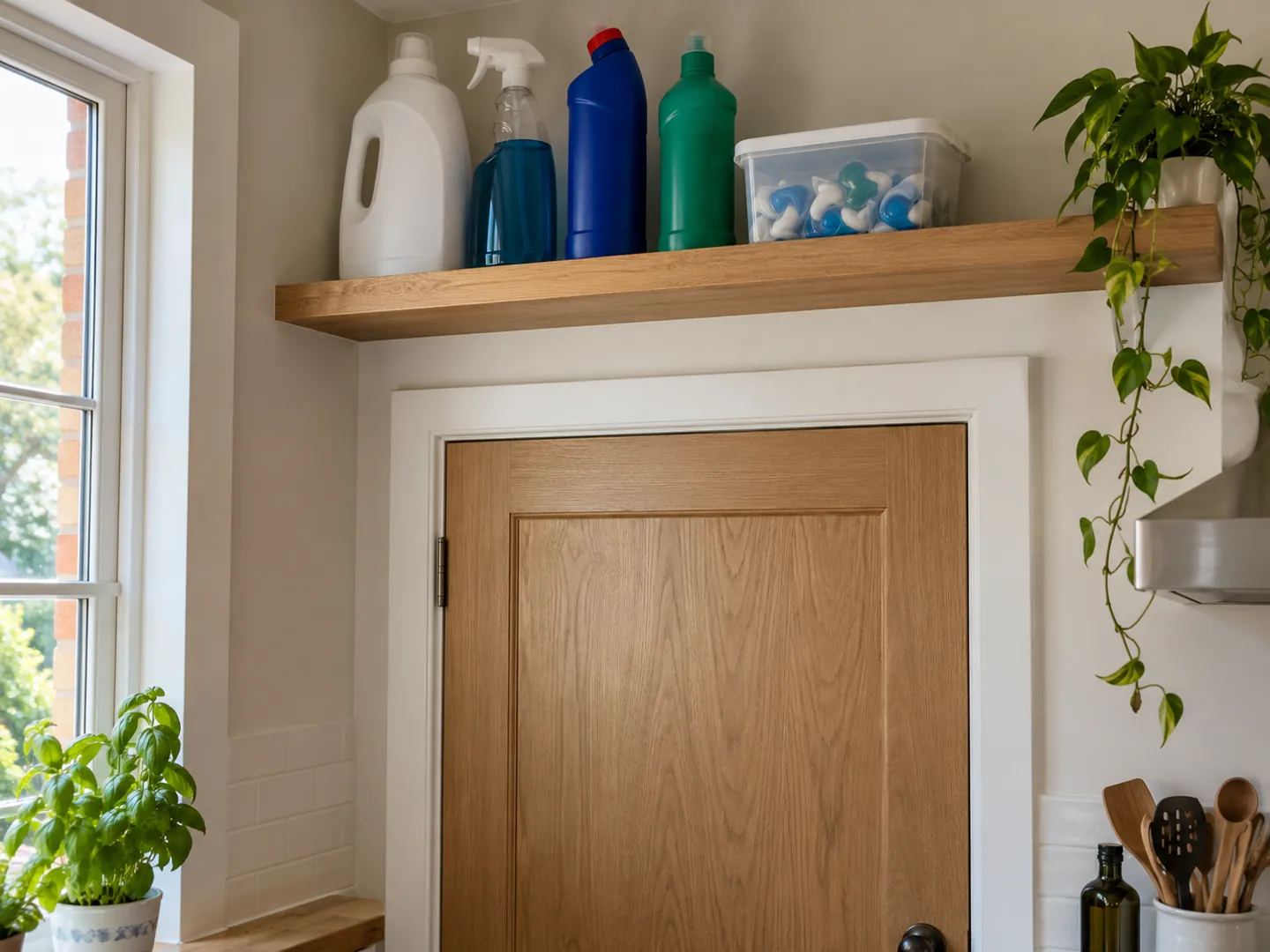
FOUR HABITS TO TRY
These come from public health and child safety guidance and cost nothing. They are about how you use and keep the products you already have.
Look for the red diamonds, the signal word Danger or Warning, and the instructions printed with them.
Never combine bleach with ammonia, acids or other cleaners. Rinse a surface before switching products.
Keep cleaners and washing pods in a high or lockable cupboard, and put them back straight after use.
Never pour cleaning products into drinks bottles. CAPT warns that small children can get confused.
TWO NUMBERS WORTH KNOWING
When households cleaned harder in early 2020,
US poison centres saw the effect.
20.4%
Rise in poison centre calls about cleaners
US poison centres took 28,158 calls about cleaners from January to March 2020, 20.4% more than in the same months of 2019. Bleaches made up the largest share of the increase.
CLEANERS · CDC MMWR
40–47%
Share of calls about children aged 5 and under
Children aged 5 or under made up between 39.9% and 47.3% of all cleaner and disinfectant calls in the January to March periods of 2018, 2019 and 2020.
YOUNG CHILDREN · CDC MMWR
The CDC report listed likely causes such as using more than the label directs, mixing products together, not wearing protective gear and cleaning in poorly ventilated areas. One case involved a sink of bleach, vinegar and hot water.
A QUICK MIXING CHECK
Pick a situation to see what the Washington State Department of Health says happens when chlorine bleach meets it. The bar shows how strongly the guidance warns against it.
Based on public health guidance on mixing bleach with other cleaners. This is general safety information, not medical advice.
READING THE LABEL
Under the CLP rules, hazard pictograms are red-bordered diamonds with a black symbol on a white background. They replaced the old orange rectangular symbols, and the gas cylinder, exclamation mark and torso pictograms were new.
The signal word tells you how serious the hazard is: Danger for the more serious categories, Warning for the less serious. Hazard statements start with H and precautionary statements with P, printed together with the pictograms.
In conversation
Bleach contains sodium hypochlorite. Mixed with ammonia it produces toxic chloramine gases, and mixed with acids such as vinegar or some toilet cleaners it gives off chlorine gas, according to the Washington State Department of Health.
They are GB CLP hazard pictograms. HSE lists nine, including corrosive, flammable, acute toxicity (skull and crossbones), health hazard (exclamation mark) and serious health hazard. One product can carry more than one.
Under CLP, Danger marks a more serious hazard category and Warning a less serious one. Only one of the two signal words appears on a label.
Child safety charity CAPT advises moving them from beside the washing machine to a high or lockable cupboard, because small children can mistake brightly coloured pods for sweets or toys.
The NHS says to call 999 or go to A&E if someone may have swallowed, touched or breathed in something harmful, and to call NHS 111 if you are not sure. Do not try to make them sick.
Each figure on this page comes from the sources below.
ABOUT THIS NAME
doodleagent.com is part of the DoodleSale portfolio. Check the current listing and available purchase or lease options.